How hair grows, why it differs for everyone, and how laser helps reduce future growth.
01
The Hair Growth Cycle
Why hair grows, rests and sheds.
Hair naturally moves through growth, transition, rest and shedding. Laser treatment is most effective on suitable hairs during the active growth phase, which is why several sessions are needed.
Anagen
Active growth phase. Deep active follicle; active hair matrix; pigmented growing shaft; dermal papilla supports growth.
Catagen
Transition phase. Growth slows and the lower follicle shrinks as the bulb separates from the dermal papilla.
Exogen
Shedding phase. The old hair sheds as the cycle continues.
Telogen
resting phase. A club hair remains in the resting follicle without active shaft growth.
Exogen — shedding phase. The old hair sheds as the cycle continues.
2
Why Hair Differs
Genes, hormones and melanin all play a part.
Follicle density
People can have different numbers of follicles per square centimetre of skin.
Hair thickness
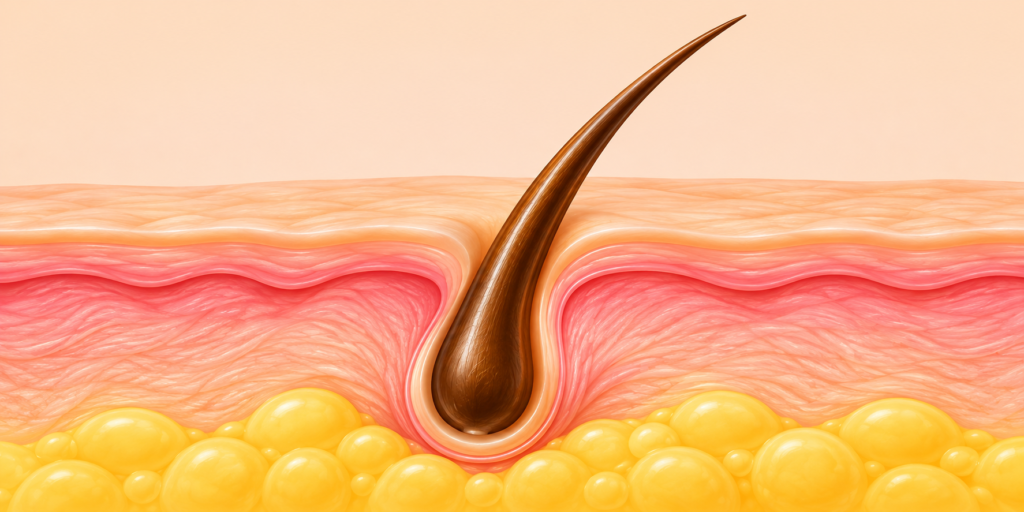
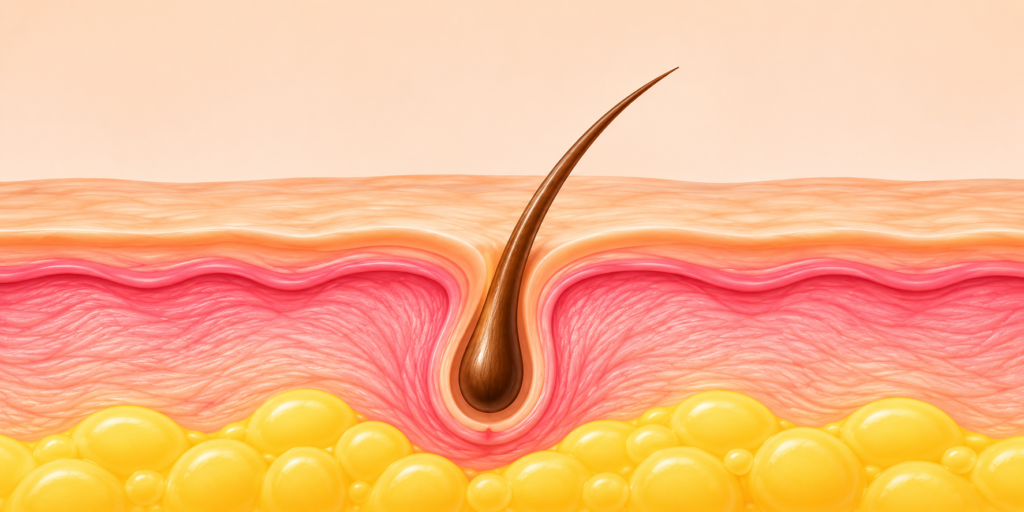
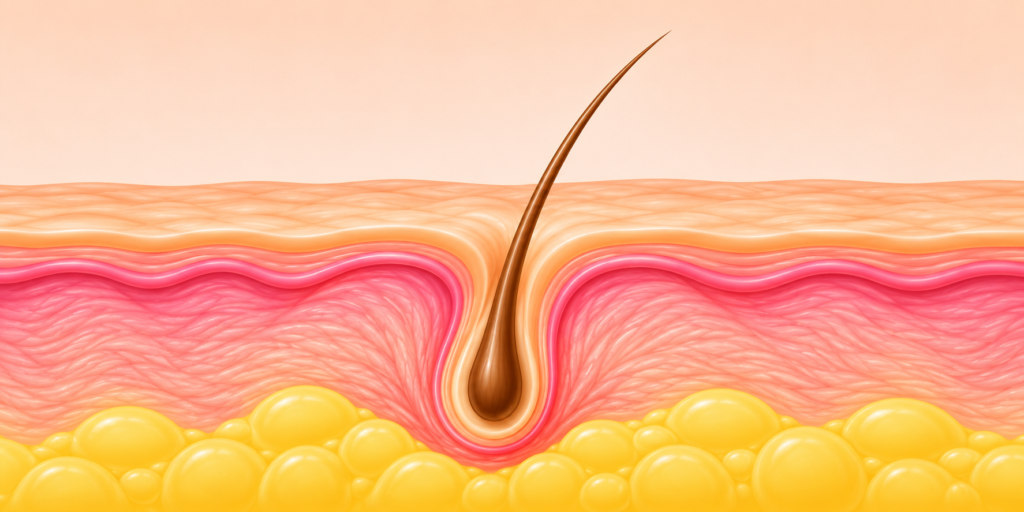
Hair strands can be fine, medium or coarse, with different shaft diameters.
Hair colour & melanin
Hair colour is determined by the type and amount of melanin in the hair shaft.
01
How Laser Works
Targeting the follicle with laser energy.
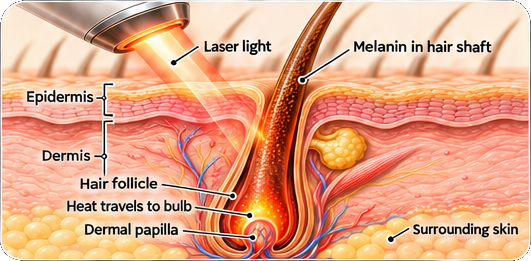
Laser energy is absorbed by pigment in the hair and converted into heat to help reduce future growth. Over a course of treatments, regrowth may become finer or less noticeable. Response varies, and maintenance may be needed.
Hairs are not all in the same growth phase at the same time. Several appointments allow suitable hairs to be treated as they enter active growth.
Before treatment
Hair grows in cycles.
Laser works best during the growth (anagen) phase.
After treatment
Hair is different for everyone.
Density, thickness and colour are influenced by genes, hormones, age and ethnicity.
(finer, lighter hair)
Laser targets the source.
It heats and weakens the follicle for longer-lasting smoothness with repeated sessions.